



Message of President
Developing the human resources that support the industrial sector.
The history of National Colleges of Technology (KOSEN) began in 37 with the establishment of 12 national colleges of technology. Keeping pace with Japan's rapid economic growth and responding to the strong expectations of industry for training practical engineers, KOSEN have strived to cultivate human resources that are relevant to the times. Within this context, KOSEN have developed significantly as a place for human resource development based on Japan's unique educational system that guarantees quality through a five-year integrated education program. Today, we believe that the character for "talent" in the name of the human resources that KOSEN produce should be replaced with the character for "wealth," as they are truly assets to society.
In today's highly advanced industrial society, the mission of National Institutes of Technology (KOSEN) is to cultivate creative and practical engineers who can thrive in the international community. Fortunately, KOSEN graduates have received extremely high praise from various sectors both domestically and internationally, and we are confident that they have fully fulfilled this mission. This is the result of the efforts of faculty and staff throughout the more than 60-year history since the establishment of KOSEN, the achievements of our graduates in society, and the strong support we have received from industry, government, and academia. We would like to take this opportunity to express our sincere respect and gratitude to all those involved. KOSEN will continue to make every effort to cultivate human resources who will not only be active in society but also become valuable assets to society, driving and leading the development of an advanced industrial society.
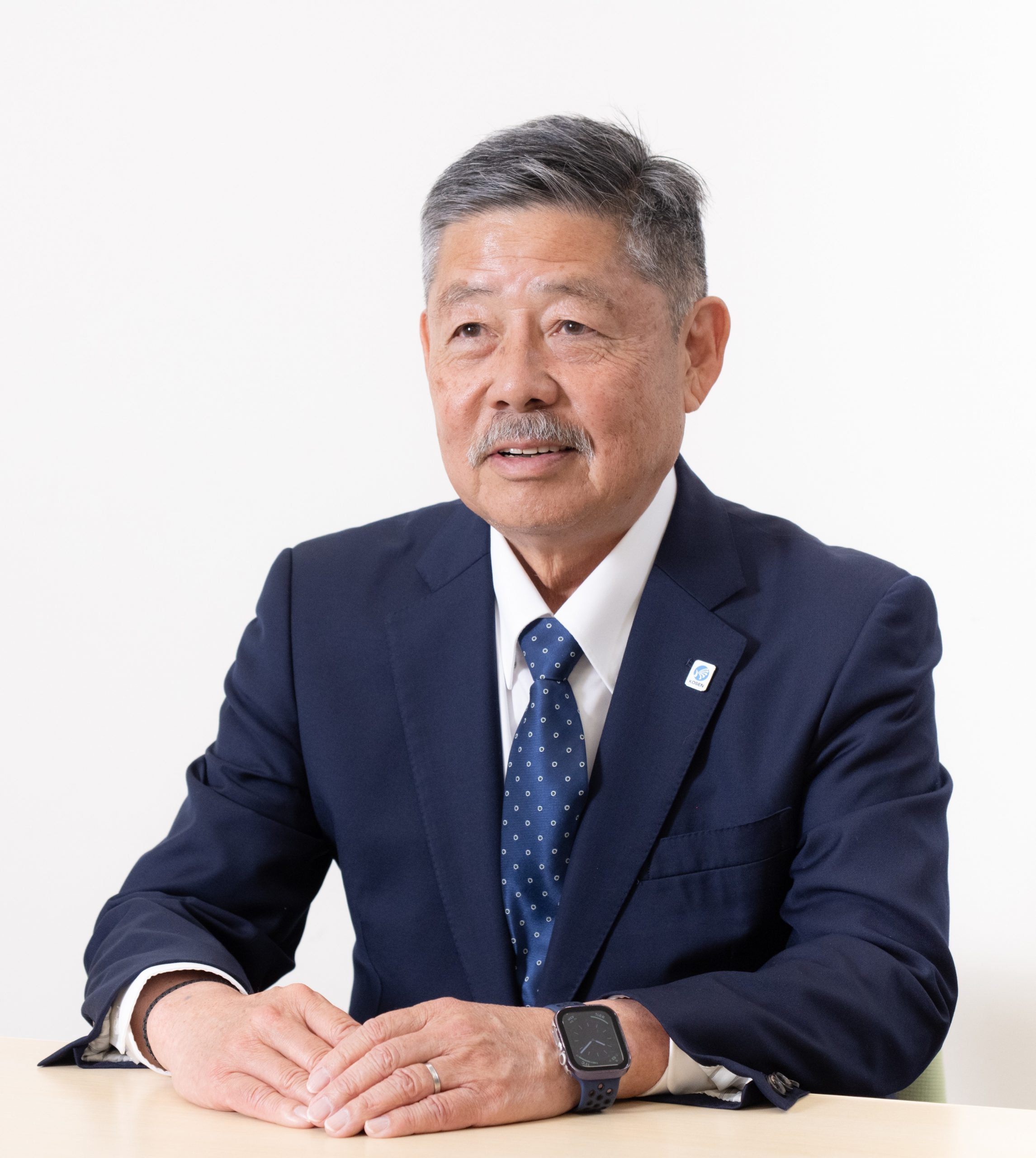
Independent Administrative Agency National College of Technology
Chairman: Eiji Nakajima
Leading the way in change
The social environment surrounding us is changing rapidly. In particular, compared to when National Colleges of Technology (KOSEN) were established, the environment surrounding KOSEN has changed dramatically due to the progress of globalization, the rapid advancement of science and technology, significant changes in industrial structure, and a substantial decline in the young population. On the other hand, this change also presents an opportunity for KOSEN to make new strides. In this sense, the role of KOSEN, which has been and will continue to be played in fostering human resources with the "KOSEN spirit" that can thrive in today's international society—that is, creative and practical engineers with a high level of ambition who possess the challenging spirit to overcome immediate problems by facing reality head-on and using ingenuity, and the high level of specialized skills to achieve that—will become increasingly important. In order to meet these societal expectations, we will respond flexibly to the changes in the social environment surrounding us, firmly define the role that KOSEN should play, constantly proactively review our organization, and transform and evolve ourselves in a better direction. Based on our past achievements, I believe it is my responsibility as President to take the lead in reforming not only the organization but also the educational content, in order to cultivate the human resources who will bear the future of our country. We will promote future-oriented initiatives with an international perspective, in cooperation with a wide range of related sectors. I would like to ask for your continued understanding and support of the National Institute of Technology, and with that, I conclude my inaugural address.
Hideharu Nakashima, President, National Institute of Technology, Japan
[Career]
1985: Withdrew from the doctoral program at the Graduate School of Science and Engineering, Kyushu University.
1985: Assistant Professor, Graduate School of Science and Engineering, Kyushu University
Obtained degree in 1990 (Kyushu University Doctor of Engineering)
1990: Associate Professor, Graduate School of Science and Engineering, Kyushu University
Associate Professor, Graduate School of Science and Engineering, Kyushu University (2000)
Professor, Faculty of Science and Engineering, Kyushu University (2005)
2009: Vice Dean, Faculty of Science and Engineering, Kyushu University
2012: Dean of the Graduate School of Science and Engineering, Kyushu University
President of the Japan Institute of Metals, 2017-2018
Board Member, National Institute of Technology, Japan (2024)
Appointed President of the National Institute of Technology, Japan in 2026.
His area of expertise is structural materials science, particularly research on the high-temperature strength of heat-resistant metallic materials.